
At home on the table
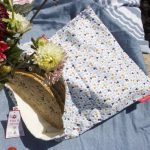
A bread bag doesn’t have to be invisible. Ours are designed to be part of the table — a pattern you chose, fabric that works as well in a kitchen as it does in a bakery. Something worth leaving out between trips to the bakery rather than stuffing in a drawer.
Built to last
At the bread slicing machine — no paper bag required
Self-service bread slicing machines are a fixture in supermarket bakeries across Europe.
Place your uncut loaf in the top, choose your slice thickness, and the machine delivers it at the bottom — where plastic guides hold the loaf together so you can grab it by either end and slide it into your bag, then pull the drawstring closed.
Any bakery will slice a loaf for you on the spot and put it directly into your Flax & Stitch bag.
The standard Bread Bag fits most regular loaves from the supermarket. For a wider round loaf or a large artisanal bread, the Large Bread Bag gives you the extra room. For a baguette, there’s a bag for that too.
Why two layers?
One layer of cotton breathes. Two layers breathe and insulate.
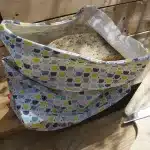
The outer layer is Oeko-Tex or Bio certified cotton — the fabric pattern you choose. The inner lining is unbleached, untreated organic cotton: no finishes, no coatings, just cotton against your bread.
Cotton breathes — which is what keeps a crust crisp. It’s not a sealed environment, so results vary depending on the loaf. When bread ages in a cotton bag, it dries — which means croutons, French toast, or breadcrumbs — rather than going soggy or mouldy.
Many customers find their bread stays fresh noticeably longer than in the bakery’s paper bag.

The bags at home
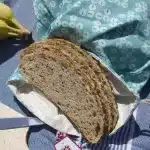
Machine wash at up to 60°C — or cooler with a normal load. Fold flat and they're ready to go.
Bread Bag Formats


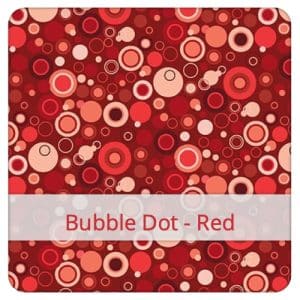
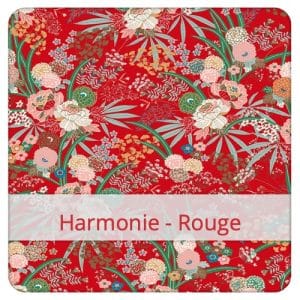
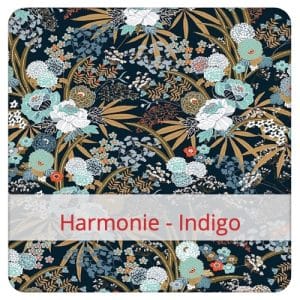
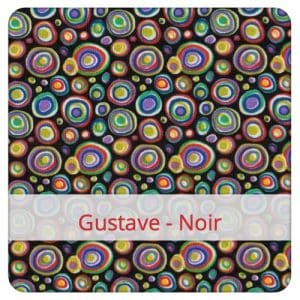
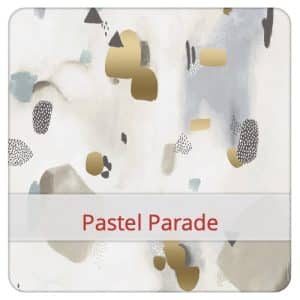
Some of our recent designs







Reusable Bread Bags – FAQs
Bread doesn’t really go stale by drying out — the crumb firms up through a process called starch retrogradation, which happens regardless of humidity. What actually varies by bag is how the crust holds up, and whether moisture pools enough to risk mould.
Three approaches show up in bread bag marketing, and they behave differently:
Fully sealed (plastic, or a solid-film waterproof fabric) traps humidity against the loaf. That’s useful for a soft sliced sandwich loaf, which wants to hold onto moisture — but it works against a crusty loaf, softening the crust and raising mould risk.
Fully breathable (our double-layer cotton) has no barrier at all. Crust stays crisp because air moves freely. Bread does dry out over time in a fully breathable bag — but for bread, drying isn’t the same failure as going soft or mouldy. Dried bread still makes good croutons, breadcrumbs, or French toast.
Partially sealed (beeswax-coated cloth, or a genuinely microporous waterproof fabric) sits between the two: vapour passes through, liquid mostly doesn’t. That middle ground is real — it’s the mechanism a lot of beeswax bag marketing describes. Two things worth knowing before you buy on the marketing alone: the specific “extends freshness by X days” figures circulating online don’t appear to trace back to any published, independent testing, and while beeswax does have some antimicrobial property in bulk, the amount on a thin fabric coating is unlikely to meaningfully affect mould growth on its own.
That same middle ground is where our Eco-PUL fabric sits — used in Flaxie Freeze, our lunch bags, and the Flaxie Wet Bags, which come in the same size format as a standard Bread Bag. It isn’t a solid plastic film: under a microscope (What is PUL?), it’s genuinely microporous — small enough to block liquid, open enough to let vapour through. Unlike beeswax cloth, it’s machine washable to 60°C and never needs re-waxing.
So the honest answer is that no single fabric is right for every loaf. For a crusty bakery loaf, a fully breathable double-layer cotton bag — like ours — keeps the crust properly crisp. For softer sliced bread — or a lettuce, or anything else that benefits from holding a bit more moisture — a Flaxie Wet Bag or a Flaxie Freeze XL is the better fit: same waterproof, microporous Eco-PUL, in a bread-bag-sized format.
| Material | Breathability | Good for | Care |
| Double-layer cotton (Bread Bags) | Fully breathable — no barrier | Crusty bakery loaves; crust stays crisp | Machine washable to 60°C |
| Beeswax-coated cloth | Partially sealed — vapour passes, liquid mostly doesn’t | Sour dough and softer breads; no independent testing found on freshness claims | Hand wash only; needs re-waxing |
| Eco-PUL, microporous (Flaxie Wet Bags) | Partially sealed — vapour passes, liquid mostly doesn’t | Sour dough and softer breads Use in the fridge for salad leaves and other higher-moisture food such as mushrooms, cheese etc | Machine washable to 60°C |
Bakery paper bags vary — some are plain kraft paper, others are treated with a paraffin wax coating that lets vapour through while blocking most liquid, similar to how beeswax-coated cloth works. Either way, a bakery bag is built for a single trip: it isn’t reusable, isn’t designed to store bread for several days and, frankly, it doesn’t look as nice as a Flax & Stitch bread bag on the table.
A Flax & Stitch bread bag is fully breathable rather than partially sealed, so the crust stays crisp rather than going soft. Bread does dry out faster in a fully breathable bag than in a coated one — but drying isn’t the same failure as going mouldy, and dried bread is still good for croutons or breadcrumbs. Unlike the bakery bag, ours goes back to the bakery again and again, then in the wash.
Customer feedback reflects that trade-off honestly: most people tell us their bread stays fresher for longer in a Flax & Stitch bread bag than in the bakery’s paper bag, but a few haven’t noticed a difference. That tracks with the mechanism above — a fully breathable bag lets bread dry out over the days rather than staying soft, so if you’re after a moist crumb for as long as possible rather than a crisp crust, these cotton bags are probably not for you — try a Flaxie Wet Bag or Flaxie Freeze instead.
It depends on what you’re bringing home. The standard Bread Bag (30cm × 36cm) fits most supermarket and bakery loaves, rolls, brioche, and pastries. For a wide round loaf, a large homemade loaf, or several items at once, the Large Bread Bag (35cm × 45cm) gives extra room — it’s also the most versatile single size if you only want one bag. A single baguette needs the Baguette Bag (16cm × 60cm); two baguettes side by side, or one long loaf, fit the Baguette Bag Duo (28cm × 60cm).
Yes — the same breathable double-layer cotton works fine for rolls, brioche, pastries, and cake; their higher fat and sugar content already slows staling, so they’re less fussy about storage than a lean crusty loaf. It has no waterproof barrier, so it isn’t the right choice for anything wet or damp — a Flaxie Wet Bag is the better fit for holding a wet item, like a damp swimsuit or towel, without it soaking through.
Machine washable up to 60°C with a normal load, or hand washable if you prefer. There’s no fixed schedule to follow — the fabric and stitching are built to handle regular washing, so wash it as often as suits your routine. Fold flat once dry; ironing optional.
We don’t have a fixed lifespan to quote, but the Flax & Stitch bread bags we use ourselves at home have been in regular service for more than 6 years, including regular machine washing.
Cotton isn’t airtight, so it won’t stop freezer burn the way a sealed bag does. A bread bag is built for short-term storage at room temperature — if freezing is what you actually need, Flaxie Freeze is the right tool for that job.
A drawstring keeps things simple: no zip teeth to catch on the fabric, no plastic parts to wear out over years of washing, and it closes with one pull at the bakery counter.
Different breads behave differently, so here’s what actually helps:
| Bread | Best choice | Why? |
| Sourdough, crusty artisan loaves | Bread Bag / Large Bread Bag | The strongest match we make. Breathable cotton stops the crust turning soft and gummy the way sealed storage would, and sourdough’s natural acidity keeps it mould-resistant for longer than a plain yeasted loaf. |
| Baguettes | Baguette Bag / Baguette Bag Duo | Same principle — but worth knowing a baguette’s thin, unenriched crust stales within hours regardless of what it’s stored in. No bag, ours included, keeps a baguette “fresh” for days; it’s about the day you eat it. |
| Rye and other dense, high-hydration loaves | Bread Bag / Large Bread Bag | Professional bakers commonly rest these loaves wrapped in linen or cloth for a day or two after baking — the same breathable principle as our cotton bags. |
| Plain sliced sandwich bread | Flaxie Wet Bag or Flaxie Freeze | This type actually benefits from trapped moisture to stay soft — the opposite of what a crusty loaf wants. A partially-sealed bag suits it better than a breathable one. |
| Brioche, challah, and other enriched or sweet breads | Bread Bag works fine | Not the deciding factor either way — the fat and sugar in enriched dough already slows staling on its own, so storage matters less here than for a lean loaf. |
One honest caveat: no bag stops a crust from firming up eventually — that’s starch retrogradation, not a storage failure. Breathable storage just keeps it from going soft and gummy in the meantime.
What our customers say
For example, about our Large Reusable Bread Bags:


